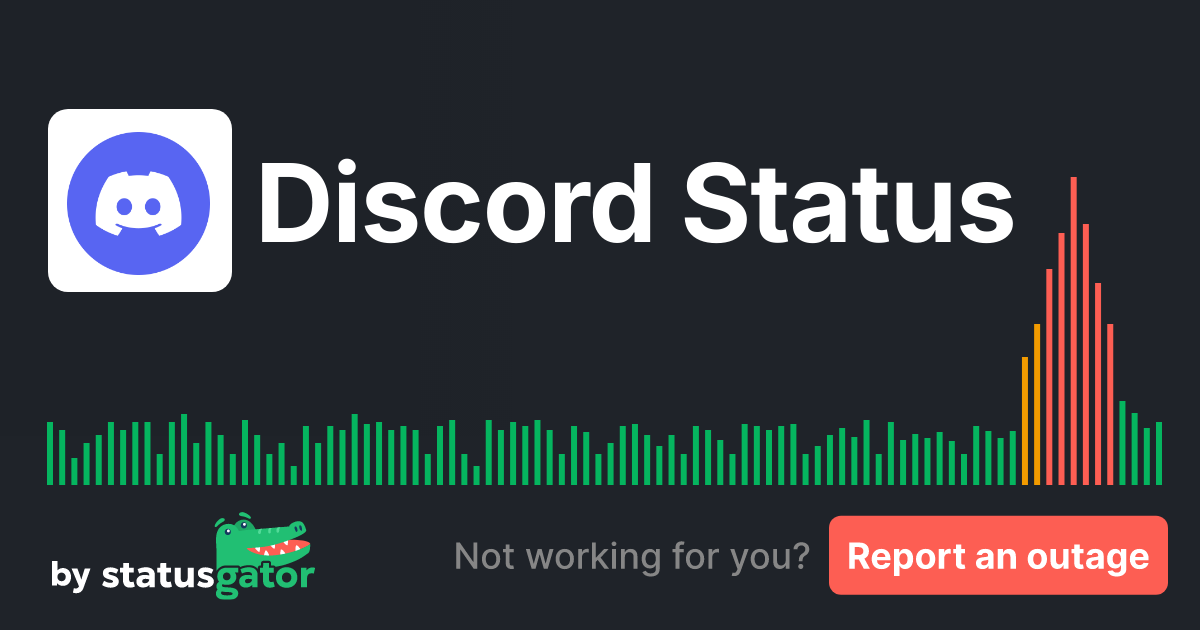
Understanding Discord Outages: A Look Behind the Curtain
In today's interconnected digital landscape, platforms like Discord serve as vital hubs for communication, community building, and collaboration. With millions of users engaging in everything from casual chats to competitive gaming and professional networking, the platform's reliability is paramount. However, even the most robust systems experience occasional hiccups. Understanding the various facets of Discord outages – from API failures to connectivity woes and even captcha issues – is crucial for any user or community manager. When you search for "Discord Status," you're seeking real-time answers to whether the platform is experiencing difficulties and, if so, why.
Discord has generally maintained an impressive uptime record, a testament to its dedicated engineering teams. Recent monitoring, such as that provided by Qodex Uptime, often reports the Discord Main Service operating with 100.0% uptime, indicative of its typical stability. Yet, the complexity of modern cloud infrastructure means that occasional disruptions are an unavoidable reality. These incidents can range from brief, localized glitches to more widespread service degradations. Knowing the common causes and how Discord addresses them provides valuable context and helps users navigate these temporary inconveniences.
The Critical Role of APIs: When General API Errors Strike
At the heart of nearly every interaction on Discord lies its Application Programming Interface (API). Simply put, an API is a set of rules and protocols that allows different software applications to communicate with each other. For Discord, the API is the backbone that enables everything from sending a simple message to initiating a voice call, managing server permissions, or running sophisticated bots and integrations. When Discord reports "General API errors," as it did on March 28th, the impact can be far-reaching.
Imagine trying to send a message, but it never goes through, or attempting to join a voice channel only to be met with an endless loading screen. These are common symptoms of API degradation. Bots might stop responding, user profiles might fail to load correctly, or even basic authentication processes could be disrupted. The incident on March 28th saw Discord's team rapidly investigate, identify the issue, implement a fix, and then diligently monitor for further problems before declaring the incident resolved. This quick response is typical for critical infrastructure like API services. For users, a sudden inability to perform routine actions or a significant slowdown across various features is often the first sign that the Discord Status page might be indicating API issues. Always check the official Discord Status page if you suspect widespread problems.
Navigating Connectivity Challenges: Why You Can't Connect to Discord
One of the most frustrating experiences for any user is being completely unable to connect to their favorite platform. On March 25th, Discord experienced "Issues connecting to Discord," which prevented many users from accessing the service at all. Connectivity problems can stem from various sources, making them particularly challenging to diagnose and resolve quickly.
Connectivity issues can be broadly categorized into client-side and server-side problems. Client-side issues might involve your internet connection, a faulty router, DNS problems, or even a localized issue with your Discord application. However, when the Discord Status page indicates a widespread "Investigating" status for connectivity, it almost certainly points to server-side or infrastructure-related challenges. These could include server overloads due to unexpected traffic spikes, routing problems across internet service providers, or even issues with Discord's underlying cloud infrastructure.
During the March 25th incident, Discord's team actively investigated the issue, specifically mentioning impacts to voice connectivity and potential temporary impacts to other features as they worked towards recovery. Voice and video services often require more stable and low-latency connections, making them particularly susceptible to connectivity disruptions. The team believed they identified the issue and took action to restore voice traffic, demonstrating their structured approach to incident resolution. If you're experiencing connectivity problems, after checking your own internet, your next step should always be to consult the official Discord Status page to differentiate between a personal issue and a platform-wide outage.
Beyond Core Services: Streaming, Messaging, and Captcha Complications
While core API and connectivity issues can bring the platform to a near halt, even specific feature degradations can significantly impact the user experience. On March 25th, prior to the broader connectivity issues, Discord reported "Elevated errors for streaming and messaging." This incident highlighted how specific functionalities, though not entirely offline, can suffer from degraded performance. The investigation revealed that these issues stemmed from a networking problem beginning around 7:53 AM PT, requiring Discord's team to engage with their cloud provider to resolve it.
Streaming and Messaging: When streaming quality drops, messages fail to send, or media uploads become sluggish, it often points to network bottlenecks or issues within the content delivery network (CDN) that Discord utilizes. These are often complex, multi-party problems involving Discord, its cloud hosting provider, and various internet backbone services. Identifying the precise "source of the issues" and monitoring recovery, as Discord did, is a critical part of restoring full functionality.
Captcha Issues: Adding another layer of complexity, March 30th saw an incident where "Captchas Not Showing." Captchas are a vital security measure designed to distinguish human users from automated bots, preventing spam, abuse, and fraudulent activities. When captchas fail to display or function correctly, it can ironically prevent legitimate users from accessing services while potentially leaving the platform vulnerable. Such issues can arise from underlying API problems affecting the captcha service, misconfigurations, or even heavy server load preventing the captcha content from being delivered. While seemingly minor, a non-functional captcha system can disrupt user onboarding, account recovery, or other critical security checkpoints, causing legitimate user frustration and potential security risks for the platform. This type of incident underscores the intricate web of services that must function perfectly for a smooth Discord experience.
What to Do When Discord is Down: Your Go-To Guide
When you suspect Discord might be experiencing an outage, the first and most crucial step is always to visit the official Discord Status page. This page provides real-time updates directly from Discord's engineering team, detailing any ongoing incidents, their severity, and the progress of resolution. Knowing the official status can save you time and frustration by preventing unnecessary troubleshooting on your end.
Here’s a practical rundown:
- Check the Official Discord Status Page: Bookmark it. This is your single source of truth for platform-wide issues.
- Exercise Patience: Incident resolution follows a clear path: Investigating, Identified, Monitoring, and finally, Resolved. It takes time for engineers to diagnose and fix complex infrastructure problems.
- Avoid Over-Troubleshooting: If the status page confirms an outage, trying to fix it yourself (e.g., reinstalling Discord, resetting your router multiple times) is usually fruitless and can sometimes exacerbate the problem on your end.
- Consider Alternatives: For critical communications, have a backup plan. While outages are rare, they do happen.
- Stay Informed: Follow Discord's official social media channels for additional updates, though the status page remains the primary source for technical incident information.
Understanding how Discord manages outages, from rapid investigation to implementing fixes and monitoring, provides insight into the rigorous process behind maintaining a service used by millions worldwide.
Conclusion
Discord has become an indispensable platform for countless communities, and its reliability is a testament to its robust architecture and responsive engineering team. While the platform generally boasts high uptime, understanding the types of incidents that can occur—be it "General API errors," "Issues connecting to Discord," or specific feature degradations like streaming, messaging, and even "Captchas Not Showing"—empowers users to better navigate these temporary disruptions. The "Discord Status" page remains the ultimate resource for real-time information during such events. By staying informed and patient, users can confidently return to their communities knowing that Discord's team is diligently working to resolve any issues and maintain the seamless experience we've come to expect.